
Introducing The Community Preservation Alliance
Featured


This gallery contains 3 photos.
This is a clearly blighted house on an otherwise nice block fronting Broad Street near LaSalle University. A concerned neighbor reports: “Dumping trash, crime, drugs, squatting, fire hazards all near to my home with two young children. I clean, they … Continue reading
This gallery contains 3 photos.
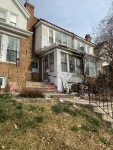
We are happy to report that residents of the 600 block of Wendover Street will no longer be subjected to the eyesore and danger of the blighted property on their block. In conjunction with the Community Preservation Alliance, we have … Continue reading
As Ryan Briggs reported in this article for WHYY, after the 2019 intensive overhaul of Philadelphia’s long-troubled land sale process, the City is finally selling off some of its 6,000 vacant parcels. While this is being lauded as progress, the … Continue reading

This gallery contains 1 photo.
The Land Bank was created with the best of intentions and input from numerous stakeholder groups. The exhaustive process to formulate, structure and implement the Land Bank took years, and it was finally brought into being in early 2017. Now … Continue reading

This gallery contains 1 photo.
From a Neighbor: I recently moved on the block and this home has Scooby Doo sheets in the windows and also has a broken window with access into the home . My biggest fear is people going in to use … Continue reading
I think it is best to clarify what Abandoned Philadelphia is, and what it is not. The site is intended to provide a forum and means for community residents and other interested parties in Philadelphia to post addresses of blighted properties in … Continue reading
For all of you who are interested in buying Philadelphia’s city-owned properties, be sure to check out the Philly Landworks site. See below, this is directly from the site: This is the starting point for purchasing publicly owned property in … Continue reading
From a reader: After years of 311 reports literally nothing has been done to hold the building’s owner accountable for the condition of his property…. The doors and windows laws are not enforced here as they are elsewhere in the … Continue reading
This gallery contains 1 photo.
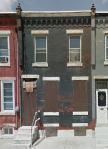
An astute reader submitted an inquiry into this address, as it is clearly blighting the block in this rapidly developing part of Grays Ferry. Our research shows an interesting story with an uncertain ending. The property was sold in May … Continue reading
A Great Success Story of Blight Removal The two iconic Divine Lorraine Hotel signs that sit atop the historic building on North Broad Street will light up again on November 9. “It should be a good time for everyone to … Continue reading
This address has generated a lot of interest since we posted it in 2013, as the neighborhood is really coming up around it, with both The Promise Zone and Drexel’s expansion. In April 2016, the property transferred to Westview Development … Continue reading
We are pleased to announce that this currently vacant parcel will soon be developed into new, productive housing in this burgeoning Francisville neighborhood. It took more than a year, but the deeds on these parcels have been cleaned up and … Continue reading
Abandoned homes, and urban blight are a huge problem in the city of Philadelphia. This article published by Philly.com about 6 months ago, highlights how gentrification, and urban blight go hand-in-hand. Philadelphia is a city that is constantly changing. Our population is increasing, while our supply of commercial and residential spaces struggles to rise to meet demand.
By recognizing the problem of urban blight, we can report it, and do something about it. I, personally, would like to see Philadelphia become a city that we can all take pride in. Not just a city of socially stratified neighborhoods.
 Daily News Graphic
We don’t think these are “cool,” as Curbed Philly coined them. They are blight, pure and simple, destroying neighborhoods and robbing the city of energy, vitality, and economic activity. What’s cool about that?
We do not advocate the “hobby” of entering abandoned buildings, as it is illegal and extremely dangerous. Nonetheless, as long as some insist on this activity, there will be records of our abandoned buildings.
What they are, of course, are faded glories some of which will be rescued from demolition as Philadelphia’s development and growth continues. Significantly, both Mt. Sinai and the Dreuding Building have received significant investor interest recently and will likely be developed soon. Ditto the Metropolitan, however, the outlook on that is less certain.
Read more here:
Eight of the Coolest Abandoned Places in Philly – Curbed Maps – Curbed Philly.


 Abandoned Philadelphia