Technically Philly
OPA Data Liberator: the hackathon project that fills in where city property records leave off
Technically Philly
OPA Data Liberator: the hackathon project that fills in where city property records leave off
The Redevelopment Authority of Philadelphia (RDA) is undergoing an overhaul by the administration of Mayor Michael Nutter, aimed at making its inventory and dispoal policies more transparent and accessible to the public. The state-chartered entity, which has the power of eminent domain and to dispose of property for less than market-value, has conveyed thousands of vacant properties over the past few decades to individuals, companies, and organizations. Most have been redeveloped – but not all. The map below shows about half of all properties (data source errors currently make a complete list impossible) which were conveyed by the RDA since 1986, but remain vacant today. Please note: many approved redevelopment projects consisted of the acquisition of vacant lots as private side yards, which still show up as “vacant.”
Abandoned City | PlanPhilly: Planning Philadelphia’s Future.
There are more than 40,000 abandoned lots in Philly. Why are we a city full of holes?
Theres maybe no single issue that permeates every facet of city life — crime, politics, gentrification, development, happiness — more deeply than Philadelphias 40,000-plus vacant and abandoned lots. Theyre arguably our biggest problem, and also our biggest opportunity. An empty lot is usually one dream gone bad and another unfulfilled. Its nothing and anything.
via The Vacant Land Issue | Philadelphia City Paper | 07/21/2011.
A Primer on HB2188 – Conservatorship for Abandoned Properties
posted by: Cindy Daley
05-04-2010 @ 10:46 am
In small cities, large cities, and rural towns throughout the state, 300,000 buildings stand vacant. Too often properties sit vacant because the tools for dealing with them are not appropriate for the job. The tax sale process is too unpredictable; there is no control over what will happen to the property once it is purchased. Conservatorship allows a community to take control of its future by addressing the problem of abandonment.
Housing Alliance PA New Tools Quick Guide FINAL Feb 2011
This NEW TOOLS QUICK GUIDE provides a compilation and brief description of state laws recently enacted for Pennsylvania’s communities to address the problem of vacant, abandoned and blighted private property.
So were we. So, we did a quick search of public records in the 19121 zip code. This is the area that includes the fast-growing Temple University Main Campus, west of Broad to 33rd Street, roughly bordered by Girard Avenue to the south and Dauphin to the north. Vacant property only. What do you think we found? Take a look for yourself.
If you see something you like, contact PHA and get in line.
If recent events are any indication, it just might come to pass that the Philadelphia Housing Authority, which owns about 4,000 vacant properties, will sell off some and hopefully all of its unwanted parcels. This disgraceful policy of holding them has been an affront to Philadelphia’s residents who face plenty of obstacles in stemming the creeping deterioration of the housing stock and the fabric their neighborhoods.
Community groups and non-profit developers are eagerly waiting for more information.
Let’s hope Michael Kelly, PHA’s new Administrator, has the will and political muscle to see through the initiative he started to sell these properties.
Read more: PHA Looking for Takers
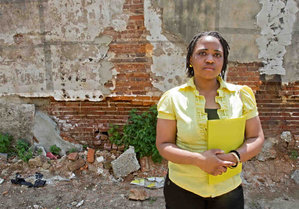 A recently formed coalition called the Campaign to Take Back Vacant Land recently released a report, “Put Abandoned Land in Our Hands.” According to this report, 25 percent of the properties in the section from Girard to Lehigh Avenues and Front to 10th Streets are vacant or blighted.
They are seeking support to turn this deplorable situation around.
Seeking answers on blight in one section of Phila. | Philadelphia Inquirer | 05/13/2011.
This posting is from a neighbor in the Parkside section:
I am with the Viola Street Residents Association a grassroots community group in the East Parkside section of West Philadelphia. We have at least eleven (11) abandoned properties (most of them for years) and 7 vacant lots on our street alone! We are desperately trying to find a solution to slow down the deterioration of these properties and hopefully saving them for future rehabilitation. We DO NOT WANT ANY MORE DEMOLITION! We want and need development that will benefit the current residents. We already had an abundance of “tear downs” due to the condition of the property and demolition under NTI. I can send you the addresses. There is no need for me to point out how this saturation has impacted residents on our street and the health of our community.
4272, 4230, 4268, 4218, Viola Street and more..
Community organizations in North and West Philadelphia came a step closer this week to turning blocks of mostly vacant or abandoned properties into new housing, a health and wellness center and a mixed-use development.
The Philadelphia Planning Commission Tuesday approved an amendment to the Model Cities Urban Renewal Plan, authorizing the redevelopment authority to acquire 54 properties on the block bounded by 21st and 22nd streets, Cecil B. Moore Avenue and Nicholas Street in North Philadelphia. Project H.O.M.E plans to build a health and wellness center in cooperation with Thomas Jefferson University Hospital. The commission also approved the acquisition of 2804 West Oakdale Street, which will become part of a Philadelphia Housing Authority residential development project.
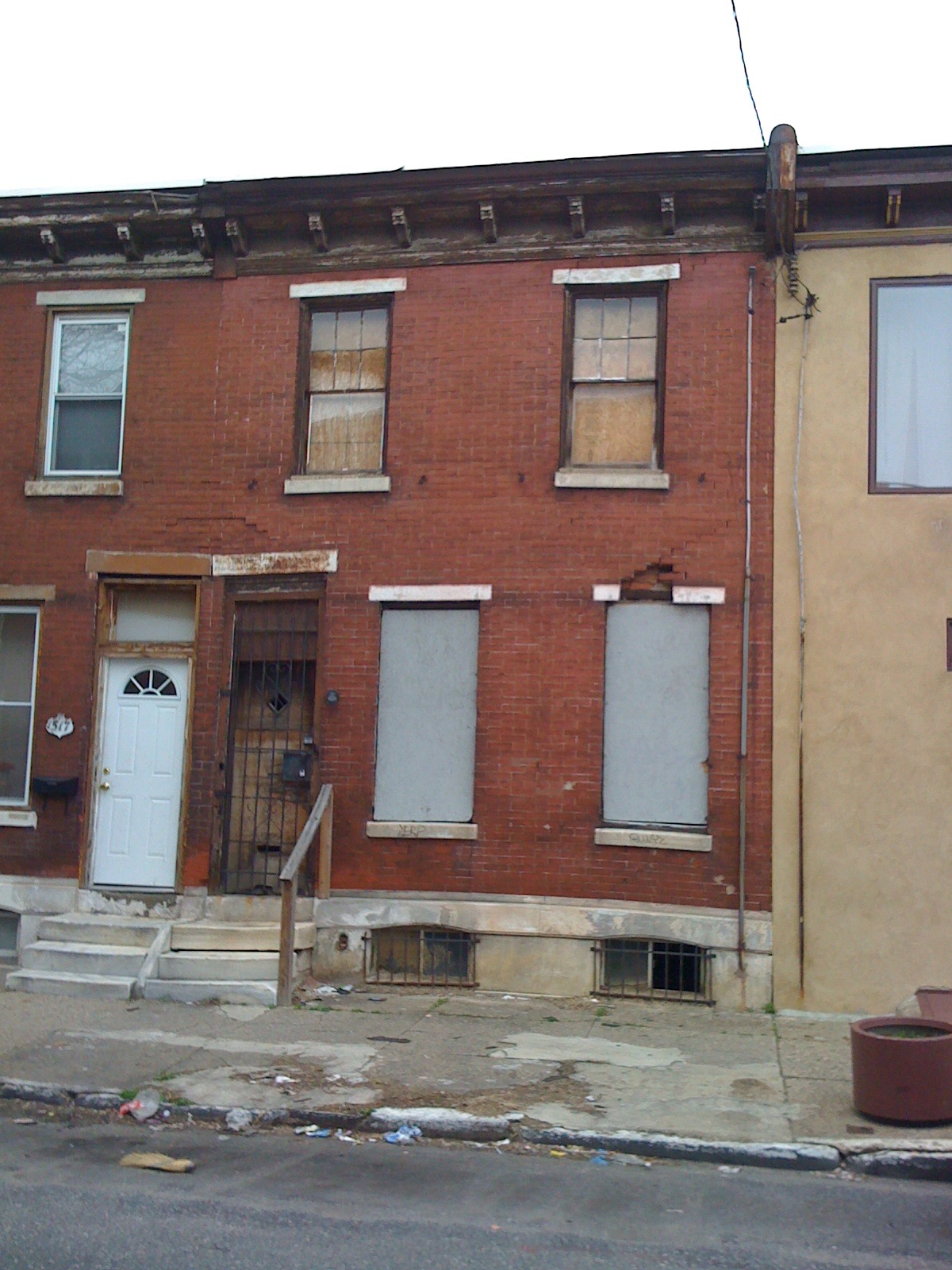
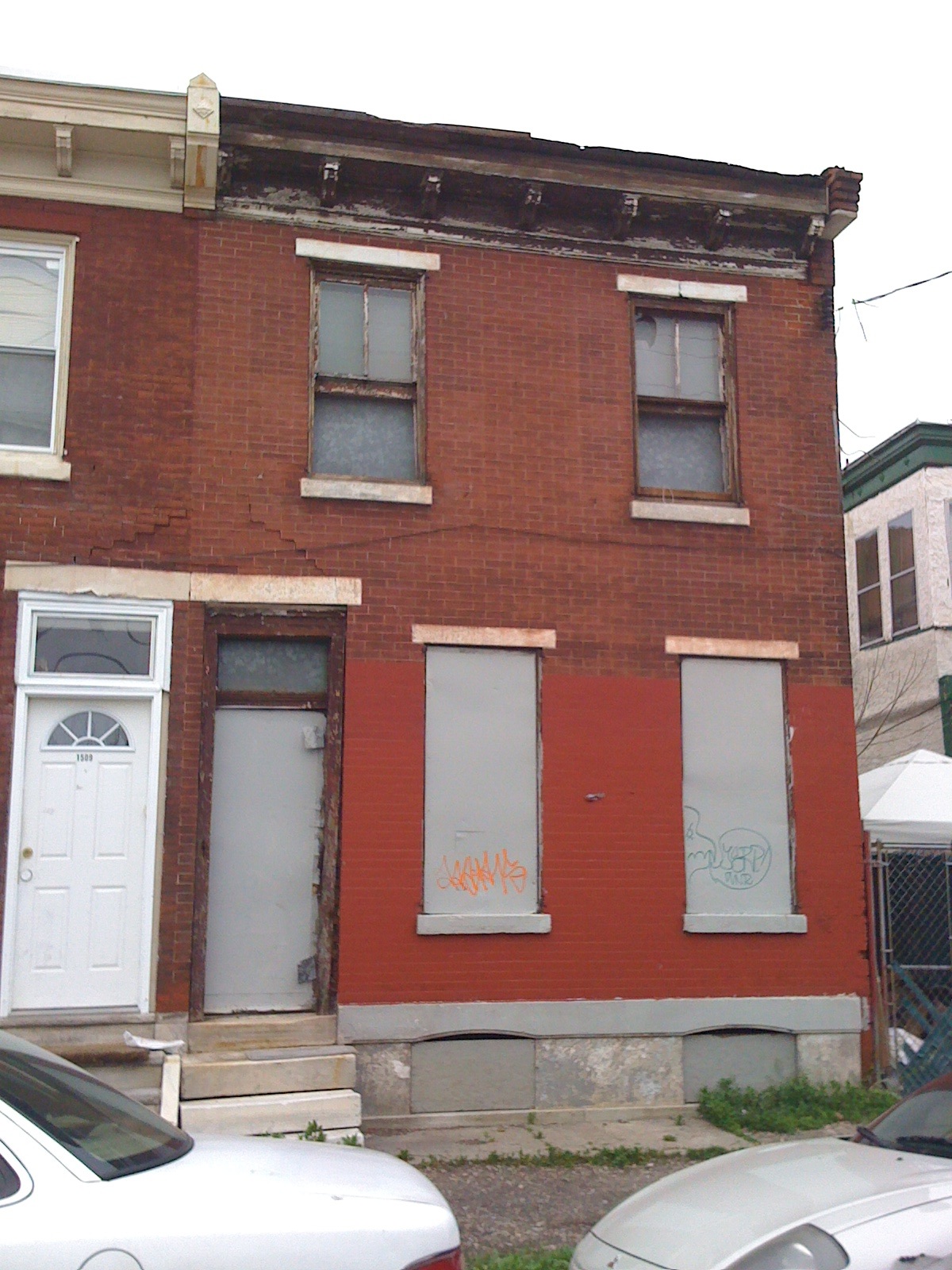
This is an interesting story indeed, folks.
See below for a bit of history on this property:
A SOSNA meeting tonight addresses the Conservatorship Act
We at Abandoned Philadelphia have known for years what the rest of the community is picking up on. Finally, the City kicks in some resources:
Tens of thousands of abandoned properties and vacant lots stretch across Philadelphia. Counts vary, but recent studies estimate at least 40,000 such properties, 75 percent of which belong to private owners — often delinquent on taxes and bills, often missing in action. In some cases, the owners might be dead or unwitting heirs. But others are slumlords and prospectors, whose game is to sit on these properties for as long as it takes to make a buck on them, while their properties attract crime, accumulate trash and fuel the spread of further blight.
This story, a partnership between City Paper and PlanPhilly, is the first of a series – “The Abandoned City” – about vacant and abandoned city land, funded in part by a grant from J-Lab: The Institute for Interactive Journalism.
By Isaiah Thompson and Anthony Campisi
Of the many, many terrible things that have happened to Theresa Lugo in front of her house, getting stuck in the foot with a used syringe is not, if you can believe it, the worst — although that was bad.
She was loading the kids into the car for a trip to the beach, and had put on flip-flops: “The needle went right through my heel,” she recalls. Lugo now makes regular visits to a doctor for tests. So far, they’ve come back negative. “I never touched a drug in my life,” she muses, “and now I have to deal with this.”
That’s not all she and the other residents of the 300 block of Tusculum in Kensington have had to deal with — not by a long shot. In an already-rough area (the drug-ridden neighborhood is, among other things, the murder capital of the city), their block, a small row of tidy, owner-occupied houses, stands out.
Drug dealers, junkies and prostitutes roam the street at all hours. Ambulances arrive daily, if not more often, to retrieve the living or dead bodies of people who have overdosed. The sounds of beatings — and, sometimes, pleas for help — wake residents up at night.
The people on the block can point to a single, unique source of their misery: an old, mostly defunct railroad bed that passes their houses just below street level — just, that is, out of sight, winding its way through the roughest neighborhoods in the city like a kind of dry driver of drugs, prostitution, violence, murder and crime.
Their little street happens to be a major access point, and the access couldn’t be easier: The only barrier between this wild swath and their front porches is an ancient, crumbling iron fence, wide open or just plain missing in several spots on their block alone.

